Sunday, December 10, 2006

Can You Have A Platypus As A Pet In California

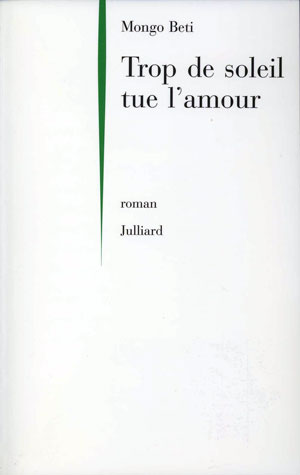
#0060 Mongo BETI


Mongo Beti was born in Cameroon. Agrégation, he has long taught Rouen. Since 1994, he moved back to Yaounde where he holds the "Library of black people."
political journalist in an African capital, Zam through the hell of life with the elegance of those who abuse alcohol and jazz. It does not bother anyone. So why steal his collection of jazz CD? Mongo Beti
, Too much sun kills love, 1999, Julliard
Notes: "Flight of Cd [...] There were, I quote in bulk, Charlie Christian, From Swing to Bop [...] Armstrong, The Sunny Side of the Street [...] Illinois Jacquet Flying Home [...] Duke, It Do not Mean A Thing with Ivy Anderson [...] Parker, Parker's mood et A Night in tunisia […] le Count, Tickle toe […] Buddy Tate, Mack the knife […] Four Brothers, Early autumn […] John Guarnieri, Autumn leaves […] Lady Day, Traveling all alone […] Clifford Brown, Jordu avec Max Roach […] Sonny Rollins, Saint Thomas […] Ella, Take the A train […] Bessie Smith, John Coltrane, Stan Getz, Miles Davis, Charles Mingus, Art Blackey & Messengers […] Surtout King Oliver, Deeper mouth blues […] il y avait même le Prez" (p.8-9) "regarde les Lester Young / Teddy Wilson, il y en a un avec une liste d'enregistrements commençant par All of me, comportant aussi, trois beaches below, Just You, Just Me. I unfortunately forgot the label "(p.10)" It was mouth Deeper blues by Joe King Oliver [...] is virtually the first time we played real jazz. "(P. 13) "It's like the blues, two or three short notes, a glass of gin, and it left I went down to St. James Infirmary [...] Like many homeless young men, African immigrants in Europe at the time Eddie was a time dabbled in jazz music in Saint-Germain-des-Prés [...] He had discovered an idol in the person of tenor saxophonist Eddie Lockjaw Davis of Harlem "(p.42-43) L history as told in the Prez Blue Lester or Shoe Shine Boy, that was exactly mine. The first time I heard These Foolish Things, I thought to die! Have you heard the chorus as Lester puts on a row in Love me or leave me? "(P.44-45)" Miles Davis and Charlie Parker playing together Round Midnight, Miles on trumpet, surprising, but Charlie tenor saxophone, a circumstance almost without precedent "(p.139)" One day, I acquire a CD entitled Lester Young Memorial [...] I am immediately hooked by this man's interpretation of a great theme very well known , Tea for two [...] I am appalled by an improvisation that had not impressed so far [...] it was These Foolish Things "(p.153)" It looks like a blues of Sonny Boy Williamson. Eddie immediately began to sing in the style of the musician (the second name, nickname, not true), but the tune of Back o'town Blues "(p.158)" times punctuated with strong irregular intervals of time very low, barely audible, on a background of scraping, as a solo by Kenny Clarke "(p. 233)" Zam heard almost instantly whiskey gurgle like a boogie-woogie Pine Top Smith "(p. 235).

Saturday, December 9, 2006

Female Size Comparison

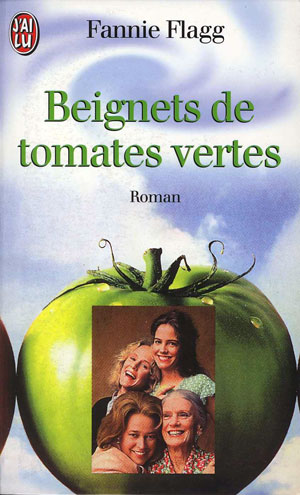
#0059 Fannie FLAGG


Fannie Flagg was born in Alabama. Producer success of television, it is also an actress. Since its release in the U.S., "Fried Green Tomatoes" broke all sales records ... It is a chronicle of the Deep South from 1929 to 1988. Humor and nostalgia ...
FLAGG Fannie Fried Green Tomatoes (Fried Green Tomatoes at the Whistle Stop Cafe), 1987, I read 1992, Trad. Philippe Rouard

Notes: "The voice of Bessie Smith briefly dominated the hubbub of a fugitive complaint that drew a thrill to Artis. Oh, careless love ... Oh, careless love ... The brass of jazz mingled with the voices of the blues when he passed the Frolic Theatre, held throughout the South to be the most beautiful theater for blacks, there were best musicals. Artis and continued to advance. Later, Ethel Waters sang What Did I Do to Be So Black and Blue? while the other side of the avenue, Ma Rainey launched an overwhelming voice Hey, Jailor, tell me what have I done?. Silver Moon and Blue Note Club, Red Hot Pepper Stomp Art Tatum led the dancers in-sham-shimmy shimmy devilish "(p.147-148)" Black and Tan Fantasy, Duke Ellington, the last wonder Decca release of "(p.266)" And the thin walls allow you to listen to the radio or phonograph neighbors, and when Bessie Smith sang I'm alone tonight, the world in Tin Top Alley, was sorry for her "(p.316)" When M'ma Threadgoode is dead, all women Troutville gathered in the garden outside the window and began to sing one of their Negro spirituals, When I get to heaven, I'm gonna seat down and rest awhile. I will never forget this. You never heard him sing like that, I have goosebumps just thinking about it "(p.331)" They would take the streetcar to go to Tuxedo Junction, where Count Basie, Cab Calloway, or? was on view "(p.435).

Friday, December 8, 2006

Confidentiality Doctor Email

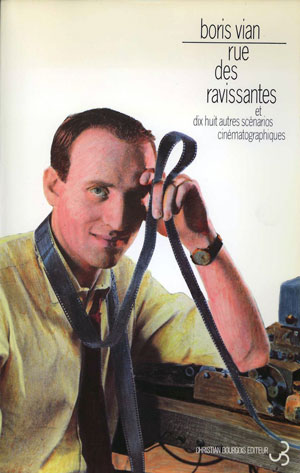
#0058 Boris VIAN


With scenarios: The soothsayer (1941-42), A man like any other (1941-42), sent the photo (1941-42), Notre Faust (or The Bike-xTai, 1942) too seriously refrain (1942), Natural History (or the black market, 1945 ) Zoneilles (1947), Marry (1950-53), Draft Scenario (1953), The cowboy of Normandy (1953), Baron Hannibal (1954), The Hitchhiker (1955) , All the sins of the earth (or The Accident, 1956), Street of the delightful (1957), Fiesta (1958), What I mingle (1958), Striptease (1958), make me sing (1958 ), Spit on Your Graves (1959). Boris Vian
, Notre Faust @ & 18 Street of the delightful alternative scenarios Film, 1941-1959, Bourgois 1989
Notre Faust (or The Bike-xTai) : "You know she swears by jazz." I must confess, "said Pat lowering the nose, that six months since I bought a trumpet and jazz that I take lessons [...] There will be Chaput guitarist and three others have already done all tournaments jazz [...] They heard a note of the exit throat of a trumpet, held note, shrill, sparkling [...] A cheerful stomp that shatter brassy notes, beautifully sustained personal background of bass, guitar, piano and drums [...] A few short bursts of copper and sax, and a fox irresistible rhythmic movement resulted in a [...] Come to repeat the Hot Club with us. It's fun, you'll find Ekyan, Chiboust and other [...] Jacques, rue Chaptal, waited in the club [...] It was Joseph Reinhardt who entered. Jacques was listening to a disc collection of HCF. Delaunay, sitting at his desk [...] Pat detailed the first steps of a light air made popular recently by the quintet, and five were lost in a masterly improvisation [...] Look, Delaunay said, holding a saxophone to Pat [...] Pat executed a beautiful counterpoint to the solo Barelli. Battery was unleashed in the small cellar and [...] Spectators swaying, possessed by the terrifying swing set that came from Pat. The song would end, trumpet and saxophone, began when a chorus clarinet. Rostaing arrived, accompanied by (illegible) who took the chorus based on his tenor sax and they ended the air in a powerful movement, the applause [...] For the first time in France, the orchestra's Pat Mount will play for you some jazz numbers. First, here in swinging to Pleyel. The piece, excellent features a trumpet solo by Pat [...] In the next song, after a brilliant beginning of the orchestra, you could hear a series of solos by Pat, separated by breaks for farm to enable him to switch instruments [...] The old vendors programs themselves agitated, frantic, carried by the demon of swing [...] With five damsels of the swing.

Thursday, December 7, 2006

Baby Magic Mennen Cologne

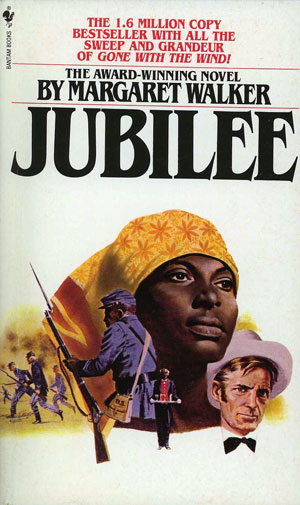
#0057 Margaret WALKER


Margaret Walker is the great granddaughter of Vyry, his heroine, black slave from Georgia. Professor of Letters Jackson, Mississippi, she completed the book exactly a century after the date of the emancipation of his ancestor.
As in almost all novels, and they are many characters who are black and framework for the South in the days of slavery, it will be marked with songs and hymns. Especially hymns. As in families with religion, the blues was banned.
Margaret WALKER, Jubilee (Jubilee), 1966, Threshold 1968, Trad. Jean-Michel Jasienko
notes: "At these meetings, all sang in the heart of beautiful songs, songs full of fervor, which made a deep impression on Vyry and she tried to retain in his memory, for able to sing them at all times "(p.48)" Aunt Sally loved to sing at meetings of the Church of the Resurrection she sang and sometimes after work, especially on fine summer evenings "(p.74)" Later, slaves gathered in front of the house for prayer and sang hymns for the guests "(p. 112) "Then the negroes sang their songs of Christmas" (p.138) "The slaves had a big party, you could hear the fiddles and banjo, someone sang Oh here comes Sally, oh Sally comes through there, all took up the refrain in chorus "(p.139)" The music was provided by a choir white, black tunics, who sang hymns, a choir of slaves who sang spirituals, a solo white Grab your flight who sang like a bird and a black violinist, who scratched his plaintive notes over the pit "(p.187)" Sometimes, working, Vyry caught herself singing. When they heard him sing, the children stopped playing and came up to her because they loved these songs, old songs that slaves sang Aunt Sally and also tender and graceful romances time of war " (p. 282) "Vyry revived the cult to which she had attended. She heard the songs, the sermon, moving testimonies. She felt the intense joy of the last song of the evening "(p.360).

Wednesday, December 6, 2006

Car Mechanic License Ontario

#0056 Dominique ZAY


ZAY Dominica Mad About Swing, 1989, Black River
A jazz trumpet player should never play the detectives. After you have to improvise to save his skin ... Easy to read. The detective story is slight but it is not the main player for the jazz lover. The most amusing is the distribution. Chet, the hero who ends up playing trumpet My Funny Valentine witnesses a murder. He is pursued by bad guys and the Brecker Brothers Brownie, Randy and Mickey, who work for the satanic Professor Roy Hubbard. There is a mac named Terry. The Chief Inspector Navarro tries to solve the case but he, as an assistant ripoux Kinney. Chet gets help from his friend Quincy (great), son of Fats and husband of Anita. A guy named Cozy and that it is not (his wife hammered the metal door of his house). A slut, Helena Shavers. Max, a drummer. In a club, Sarah Bowie sings The Man I Love, accompanied by bassist Oscar and Harold tenor. The bartender is a brave guy named Tadd.
Well, you know everybody now. Ah yes, this little world cup in 180 pages divided into 4 Intro, Theme, Solo and Final. It's good that this is jazz, and despite a few shots fired over the pages, it looks very much like a settling of accounts between blowers !
Other Cities musicians for the soundtrack: Gerry Mulligan, Miles Davis, Dinah Washington, Satchmo, Lester Young, Zoot Sims, Billie Holiday, Sonny Rollins, Bird, Chico, Count Basie, John Coltrane, Duke, Herbie Hancock.

Tuesday, December 5, 2006

60th Invitation Wording For Buying Own Meal

#0055 Tony CARTANO


Cartano Tony, American Boulevard. From Washington to Los Angeles by the southern route, 1992, Julliard
Notes: Between thunderstorms, black jazzmen homegrown quintet play on a stage erected in Forsyth Park [...] Between the solos of tenor sax and trumpet, later in the gray sky, thunder sounds. The riff drummer seemed ridiculous, but the orchestra friendly do not let them tell, swinging with a vengeance "(p.51-52)" Driven by its ironic wink to the public overheated, Joyce Cobb grabs the microphone in one hand and his harmonica on the other, and began a grass-root devilish blues. The solid quartet of King's Palace Cafe Orchestra supports the surprising swing the black singer [...] So far, Joyce and his musicians are allowed to insert, from time to time, one or two standards of variety among the classics jazz [...] A vocal qualities to Sarah Vaughan, Joyce Cooper combines a temperament worthy of Aretha Franklin. The tone rises, accelerating the syncopations of rhythm & blues damn effective [...] For a long time, since the 1900s, Memphis and Beale Street are at the heart of the history of blues and jazz. (Words in French, Beale Street Blues) So said WC Handy (1873-1958), Father of the Blues [...] Many bluesmen, but not least, knew this, Memphis Slim, Big Joe Williams John Lee Hooker or BB King who comes, moreover, to open a club in Beale Street "(p.69-70)" The Peabody [...] The good old days when customers called William Faulkner, Paul Whiteman (conductor and composer), and Dorothy Lamour in Memphis during the filming of the movie St. Louis Blues in 1939. Orchestras Tommy Dorsey and Harry James created the background [...] White Jazz, played by whites for whites "(p.80)" Clarksdale, mythical birthplace of the blues, singing deep in the Delta! [...] John Lee Hooker, Ike Turner, Little Junior Parker, Sam Cooke and so on, were all born in Clarksdale. The famous Muddy Waters y burned his youth before going to Chicago [...] The Stackhouse, Delta Record Mart [...] Jim O'Neal [...] Rooster Blues [...] Living Blues Magazine [...] The Delta Cats will be at the Blue Diamond [...] Booba Barnes & The Playboys, children of Clarksdale, under the label Rooster. And more extraordinary blues record I heard long ago: Frank Frost Midnight Prowler, under the brand Earwig [...] A juke box starts screaming for a walk swinguée Glenn Miller, although white and military. Sometimes we confuse! [...] The conclusion, I am tempted to give it to Big Jack Jackson told The oil man, who sings the blues in the juke joints of Clarksdale: "It's not as bad as before. The blues became less sad ". And follow up immediately on a verse about the Gulf War. A heart-breaking [...] The genius of local designers, from Faulkner to Eudora Welty for literature, or Muddy Waters to BB King music [...] Seriously injured, the great singer Bessie Smith was transported to the hospital in Clarksdale, where she died [...] In the 60s, the American playwright Edward Albee took a piece of this drama: The Death of Bessie Smith [...] The Blue Spirit Blues, Bessie Smith sang: Now it's ashes to ashes, sweet daddy, dust to dust, / I Said Ashes to ashes, dust to dust I mean / Now show me the man "any woman can trust" (p.93-98) " Stormy weather played a saxophone on the sidewalk [...] Their style, a mixture of poetry inspired by the experience of black Americans at the time of Martin Luther King Jr. and jazz improvisation to Ornette Coleman or Don Cherry "(p.186-187).

Monday, December 4, 2006

Cm Is Dry 1 Week Before Period

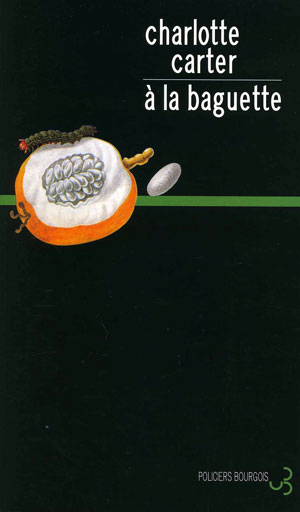
#0054 Charlotte CARTER


African American Poet, Charlotte Carter lives in New York and teaches creative writing at Rutgers University. She participates in journals and works as Remedial a publishing house. She lived in Chicago, Canada, North Africa and France. It has always been fascinated by crime fiction
Charlotte CARTER, A baguette (Drumsticks), 2000, Bourgois Cops 2000, Trad. Doury Michel
First, all chapters have titles of jazz standards. Then it's a detective story that ends well for our Nanette heroine, a young black saxophonist.
Notes: In an aggressive tone, I asked: "Who said anything bad about Charlie Rouse? Good God, I will skin the first to say bad things about Charlie Rouse! (P.7) "That had never occurred to me, The topless lady saxophonist. I would be certain to have my place in the annals of jazz" (p.16) "I made dinner listening to the Lady Day / Lester Young that I prefer, and I ironed This year's kisses two or three times "(p.23)" A clean old man apparently focused on the martini made me play Save your love for me three times "(p.28)" Not at all the style of smoky clubs where Monk, Charlie Rouse, Art Tatum and Max Roach (add the name you please) have achieved glory "(p.35)" I attacked with Blue gardenia [...] I chained with Gone with the wind and Street of Dreams [...] I'm What's New, Just Friends, Prelude to a Kiss [...] She wanted On the Street Where You Live [...] I played while he took care of Imagination two customers, and when I pushed Out of This World, he applauded "(p.60-61)" I finally tell him that I played the saxophone on the street, what course my dad and my Mom did not know "(p.105)" Eight lamentations of Abbey Lincoln, with an overwhelming love for dirty "(p.126)" My coffee in hand, I listened to Charlie Rouse in Japanese folk song. I told myself that I would change the CD before you reach the hymn Blessed Assurance (although the label is read This Is My Story, This Is My Song) [...] And it needs more courage just to hear that This is my story, or I'll Be Seeing You, or We'll Be Together Again "(p.137)" I enjoyed a feeble version of Laura, then a pot-pourri Jo Stafford's unfortunate (sic! I did not know he was a man I just imitated well!), then to Ray Coniff Singers Dontcha go 'way mad "(p.183)" The CD that obsessed at the time, Jimmy Scott. He was old now and his voice showed the strange and supernatural enough. He had devoted his talents to a weird-like directory Sorry Elton John. "(P.244).
Also cited: Nancy Wilson, Stevie Wonder, Johnny Cash, Clifford Brown, Sarah Vaughan, Whitney Houston, Della Reese, Sammy Davis, Harry Belafonte, John Coltrane, Edith Piaf, Wynton Marsalis, Thelonious Monk, Big Mama Thornton, Fats Domino, Johnny Ace, Irma Thomas, Etta James, Rolling Stones, Barry White, Dexter Gordon.
Special Literature and Jazz: "Borrowed the library for an anthology of Langston Hughes and a small leather bound edition of Cane by Jean Toomer. "(p.87).

Sunday, December 3, 2006

2 Players Gokuvsnaruto

#0053 Josef SKVORECKY


collection of essays published by JS before leaving Czechoslovakia in 1968: I was born in Nachod, How I learned German and later English, Read release, Red music, Comrade jazz player, and an interview in Prague. The author tells of the darkest moments in the history of this century by the chronicle of a small nation in Central Europe. He also tells her passion for jazz that maintains responding to events. An autobiography followed by an interview in Prague in 1968. Jazz is especially present in the chapters: How I learned English, music and Red in the interview.
SKVORECKY Josef, Comrade jazz player (Talkin 'Moscow blues), 1988, Anatolia 1996 / Reed. 10-18 No. 3078, Trad. Philippe Blanchard
How I learned English : "I heard the saxophone Chick Webb and in an instant I understood the meaning of the phrase" music of the spheres. "I heard a beautiful voice who also rose above the saxophones, and singing in the language of cowboys. I listened carefully. I understood the first sentence: I've got a guy. The second was more difficult, and it seemed to contain a grammatical error : He do not dress me in sand [...] the third sentence: He looks nothing Gable like [...] came a simple sentence: Purpose he's mine [...] I knew when it was Ella Fitzgerald, because at that time it was not interested in singing, what mattered was the group whose name was on the label [...] A new sentence understandable: I've got a guy, then he starts Into When I do not know what, I Bet? Beat me? Bit me? The meaning of petting was unknown in Bohemia "
Red music:" I played tenor saxophone [...] And despite what Leroi Jones, the essence of this music, this way of making music, is not simply protest. This is something good more fundamental: a life force, a strong enthusiasm, an explosion of creative energy, breathtaking as any form of authentic art, one feels even in the saddest of blues [...] Basically, we liked the music we call it jazz, and swing was actually the child of mixed Chicago and New Orleans [...] this old 78's who ran on a Brunswick phonograph crank, with its label or just read it: I've Got a Guy, Chick Webb And His Orchestra With Vocal Chorus [...] unknown singer [...] it was the great Ella Fitzgerald, then aged seventeen years [...] It There was even a jazz band at Buchenwald, composed mainly of Czech and French prisoners. This time added the absurd cruelty: they were sent behind barbed wire in the name of the music that was played on their premises [...] We were convinced that Casa Loma was the name of an American conductor a man the size of Jimmy Lunceford, Chick Webb, Andy Kirk, Duke Ellington (Ellington had joined the nobility through a Czech translator who had found his name in an American novel and who had concluded that it should s act of a member of the English aristocracy reduced poverty to earn his living as a bandleader at the Cotton Club), Count Basie, Louis Armstrong, Tommy Dorsey, Benny Goodman, Glenn Miller, you will not find one that we knew. And yet we did not know about [...] There was a Swedish film [...] Swing it, Magistern! [...] We had all fallen in love with the singer [...] Alice Babs Nielsson [...] much later, she recorded an album with Duke Ellington [...] a copy of the movie Sun Valley Serenade [...] I was impervious to the plot Hollywood, but mesmerized by Glenn Miller [...] the soundtrack of In the Mood or Chattanooga choo choo [...] Instead of Kenton, they pushed Paul Robeson, as we hated this black apostle who agreed to give recitals in the open air in Prague! [...] We got a magazine called Really the Blues (a title borrowed from Mezz Mezzrow) [...] the sixties saw a proliferation of international jazz festivals funded by the government. The scene of Prague Lucerna sounded notes of Don Cherry, the Modern Jazz Quartet and Ted Curson [...] The jazz is not music. It is the love of youth remains firmly rooted in the soul, forever unchanging, while the music evolves, it is the eternal appeal of the saxophones Jimmy Lunceford [...] for me, the Duke is gone, Count Basie barely survives a heart attack, Little Jimmy Rushing is gone where will all flesh-who anybody Asks you this song It Was blood,-tell 'em it was - he's been there and gone. Such is the epitaph of Small Five-by-Five. Such is the epitaph I wish my books. "
Interview: No moving quotes but a response to the question: Your relationship with jazz, of course, very special?" I'll tell you: sometimes I sometimes feel alone and suddenly hear jazz, and it's as if we had to get a bite of a very powerful stimulant. It is not just a matter of aesthetics. Jazz goes deeper and is a psychological force, a wonderful strength that gives me joy and that colors my entire emotional life. It is an endless source of pleasure, one part of my life that time has not destroyed. I am not a collector, I do not put myself in a corner listening to records. I probably can not correctly answer a single question of a game on jazz. But I love this music anonymously. Recently, I realized that I had not written a single book in which the Jazz do not play a role. Jazz, and everything he represents, for me, a key to the human enterprise. There are other currents that fall in my attitude toward jazz - memories of wartime, the role he played for us during these dismal years, the fact that it was more or less forbidden, but this has little importance. Jazz is, above all, a sort of brotherhood ".
View Jockel # 0015" The bass saxophone and Other Stories "by clicking HERE .

Saturday, December 2, 2006

Low Red Count High Mch

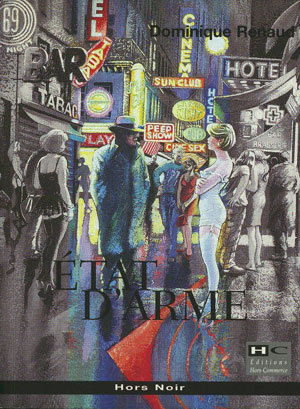
#0052 Dominique RENAUD


Born in 1961, Renaud was first published in 1995 thriller "Death to appeal."
RENAUD Dominica weapon State, 1998, Trade Off Black Out
Notes: "He put a coin into the slot in the jukebox, selecting a tube of Ray Charles. He had no real choice, and he wanted to hear jazz. Jazz, Renucci loved. One day when he was a kid, his brother had made him listen Mazz Mazzrow (sic) on a phonograph and it had tilt in his ears kid. He had then found an old pipe in a band then retired heated fingers while training at night in a disused basement in the company of a group that did the beef on a Saturday night "(p.10)" It was he who first made him known to Thelonious Monk time or Coleman swore by Ray Charles and Nat King Cole. For the inspector, it had (sic) was a shock, something comparable to those in the 40s, discovered the sound of Bird wondering if it was not an alien "(p.24)" The drummer gave the signal. The quartet began on Cherokee, a standard, Renucci seemed thrilled. He loved the theme of the 40s he had listened the first time performed by Clifford Brown. Musicians experimented with a few riffs before moving to a composition of Monk, while the foot of the inspector continued to beat the [...] Surely he would have preferred a jazz atmosphere, as a banal pop music, to talk with the old. This jazz-there was too generous in that he wanted to think of something else "(p.51-52)" The musicians began on a composition by John Coltrane, in counterpoint to the bebop that had filled the room shortly before "(p.55)" His eyes fell on photos of Bessie Smith and Nina Simone "(p.56)" From the first bars, Coleman acknowledged the trumpet of Chet Baker. A white man who was doing pretty damn good "(p.59) Scene uncensored X:" You know what it reminds me when it is drawn like that? -No. -A Gillespie's trumpet. -Shit what a compliment! "(p.61)" Coleman glanced at the name of musician Miles Davis. He smiles [...] Knowing that his friend refused to listen to a jazz musician who had dared to criticize the game of Monk "(p.91)" Coleman poured a dose ironing in his head the first steps of Naima. Village Vanguard version. New York 1966. These lines were sublime swing reminiscent of a sermon. Renucci had made him listen to several versions, all of John Coltrane. He thought the whole night, almost religious, they had spent together listening to successively Parker and Coltrane "(p.177)" The gramophone was going on and a disc of Bud Powell muted "(p.179) "From the day you brought me in this jazz club for me to see and listen to Thelonious Monk. Himself. In 64, if I'm wrong" (p.181) "He had discovered jazz at age twelve years and had made him enjoy immediately. Saxo-trumpet. A nice pair. The music was linked [...] He loved Clifford Brown, and baltringues night "(p.192).
Also cited: Josephine Baker, Bob Dylan, Juliette Greco.