Saturday, January 20, 2007

Kates Playground Full Galerie

#0070 Michel BULTEAU


Born in 1949, Michel Bulteau publishes twenty-two years which marked the Manifesto Electric contemporary poetry. Encouraged by Henri Michaux, he continues his quest for rebellious poet. In 1976, he moved to New York where he met the Beat poets, painters and musicians pop punk.
BULTEAU Michel, New York in the middle of the spectra, 2000, The Difference
Three well-lit texts speaking of an era even more lights, one of the beat generation.
Notes: Before going to sleep at three o'clock in the morning, the Harlem Jazz still bubbling in his head [...] You never told me the other day that White Light was the title of a painting Pollock reproduced in the album Free Jazz Ornette Coleman? [...] John Coltrane, a stethoscope dangling around his neck, could participate in the 1970-alas Jamsession of three years earlier he had parted company with everyone- with Jimi Hendrix on guitar and Jim Morrison on drums and his complaints resembling half-closed eyes of Buddha, to ravage the Sunshine of Your Love Cream [...] One afternoon in February 1989 spent listening a tape of Sam Cooke. Chain gang, one of the favorite songs of my adolescence. Sap burning Having a party and Twistin 'the night away. Johnny remembers the name of the guitarist Cliff White [...] Johnny has always preferred the film version with Frank Sinatra in Nelson Algren's book [...] Jerry Nolan confident that his favorite movie was Gene Krupa Story with Sal Mineo.

Friday, January 19, 2007

How Many Calories Does Chapstick Have

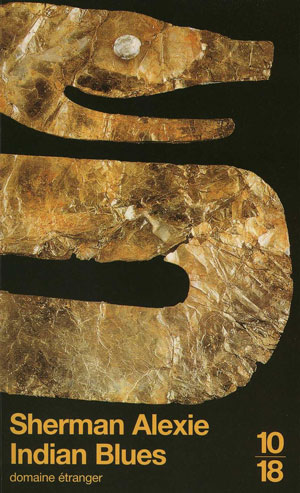
#0069 Sherman ALEXIE


Sherman Alexie, thirty years, is considered one of the best writers of his generation. enfant terrible of American letters, he builds a work unlike any other, modern, which is Indian Blues the perfect illustration.
ALEXIS Sherman Indian Blues (Reservation Blues), 1995, Albin Michel 1997 / Reed. 10-18 No. 3059, Trad. Michael Lederer
The legend says that in 1931 the famous black musician Robert Johnson sold his soul to the devil in exchange for a magic guitar and a talent for the blues. Presumed dead for more than half a century, it reappeared today on an Indian reservation in Washington State in search of an old woman with successive Marvin Gaye, Jimi Hendrix, Janis Joplin and . This represents only does it not for him last hope of being freed from diabolical pact? Still, he ended up forgetting his guitar on board the pick-up of a young Indian who took hitchhiking. The magical instrument could still do wonders ... Thus were born the "Coyotes Spring", a rock band one hundred percent Indian whose ascension Reserves in Manhattan, will be dazzling. But we can play the instrument of evil with impunity? Although some jazz in this nice story well. A sample: "It's an Indian who invented the blues one day before Christopher Columbus landed, and rock'n'roll, the next day (sic)" (p.161).

Thursday, January 18, 2007

Halli Berry Hair In Catwoman

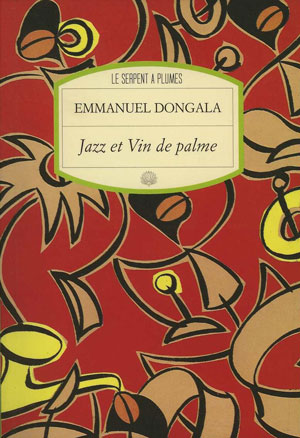
#0068 Emmanuel Boundzéki DONGALA


Emmanuel Dongala Boundzeki was born in 1941, Congolese father and mother CAR. He spent his childhood and adolescence in Congo, is studying in the United States and France, before teaching chemistry at the University of Brazzaville. During the Congo conflict in 1997, he left Brazzaville with his family. With the active support of Philip Roth, he finds refuge in the United States. He has been professor of French literature and chemistry at the University Simons Rock (Boston). Emmanuel Dongala
Boundzéki, Jazz and palm wine, 1982, Black Pocket Hatier World / Reed. The Plumed Serpent Grounds 2000
In this collection, two new "Jazz and Palm Wine" and "A Love Supreme"
Notes: Jazz and Palm Wine : "The music of John Coltrane threw them into a catatonic state first, then in a kind of nirvana [...] this which allowed then to the music of Sun Ra cosmic to volatilize "(p.122)" Millions of disks were engraved by John Coltrane in secret [...] was treated like a king around Sun Ra and his band never had so much sun work "(p.123)" Suddenly, from everywhere, from homes, the interior of the Earth, Space, broke the haunting sounds of the saxophone of John Coltrane [...] While Sun Ra began his rocket-orchestra running [...] Sun Ra was the first man and black jazz musician to become president of the United States [...] this is so, then, that jazz conquered the world [...] John Coltrane was canonized by the pope under the name Saint Trane. The first part of his work A Love Supreme replaced the Gloria in the Catholic Mass "(p.124-125).
A Love Supreme:" When I reached my native Africa, I knew only vaguely classical music Armstrong, Ellington and Bessie Smith still [...] I found this stirring music nostalgic because [...] When I was feeling down, I plunged into the deep and painful soul of Billie Holiday or Ma Rainey. Conversely, I hopped on the fellows and ribald rhythms of Fats Waller and Willie the Lion Smith "(p.137-138)" Christ died [...] I tried to join Archie Shepp who was in France [... ] I tried to ultimately join the poet Imamu Baraka, but he left Newark "(p.139)" In fact, he (Coltrane) was not unknown as he was pleased to have us believe because he had burned a disc with Ellington, besides of course the discs with Miles and with many other great musicians such classics Johnny Hodges Theolonius Monk (sic), etc.. But for him, it does not matter, it was the past. For him, music, like any living art, should cease to excel, to excel "(p.144)" Little by little, weak at first, swelling, swelling, rising and submerging like a torrent, saxophone JC emerged from the chorus [...] sounds, phrases, harmonies, the passion, the screams of the saxophone soared, inexhaustible as a raging sea "(p.145-146)" Christ died. We listened long drives that we had him, we felt more love volcano, if not cataclysmic, who escaped from the instrument of this incredible musician "(p.152-153).

Wednesday, January 17, 2007

Simple Hairstyles For 8th Grade Graduation

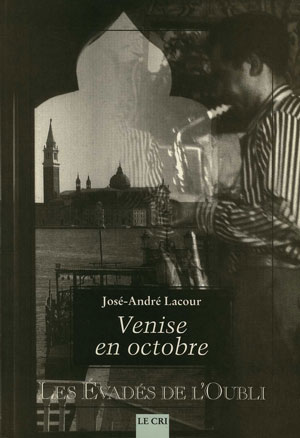
#0067 José André LACOUR


LACOUR Jose Andre, Venice in October, 1958, The Cry / Reed. Julliard
A saxophonist in Venice ...
Notes: This is the story of Bobby Saxalto, a boy who wanted to go to Venice in October. He played the saxophone and that is why we nicknamed him Bobby Saxalto, but this was not his real name. He played beautifully, his temples swelled and your memory listened born of terrible dreams, as when once heard the old Bix Beiderbecke or listens these days by soaked overnight star and regret, Don Byas "(p.5)" He was sweating and vibrating and roaring St. Louis blues The man I love with the voice torn, rough and pitted with Louis Armstrong, a voice so much older than him, a voice so torn by life, the years and suffering we had before and she worried belonged to this little boy blond and bland [...] He left Bobby alone complete, closed eyes, nose wrinkled over his saxophone, bitter and anguished melody that brought together all "(p.37)" He played. He played standing at the foot of the bed of Ma, without losing my eye, his temples swelled and his cheeks, he put a warm heart and desperate and he never again played Stormy weather like that day. Never more than elsewhere, for years and years, he played Stormy Weather "(p.40)" He played beautifully, tearing your guts, tears and heart [...] You and other spectators customers and musicians who were in this little box Pigalle reddened in the smoke, you split the heart by watching this boy, trembling, leg too short and swollen at the temples, so pale but so beautiful, swaying in his music, his eyes closed for sinking and suffocating them with so love, hope and so much grief. And your memory of dreams were born, so heartbreaking and terrible as when once heard the old Buddy Bolden or listening, tonight, a night of stars and soaked regrets, Don Byas "(p.118-119)" I love your records. Gillespie. Charlie Parker. Charlie Parker The Bird. The immortal Charlie Parker. I play the alto saxophone, like him, that's why they called me Saxalto "(p.132)" I brought my saxophone, baby. I want to play for you [...] He played like Charlie Parker played just before his death, that is to say beautifully. He played like Charlie Parker played while the thin shadow of death already descended on his features, in Chicago, Charlie escaped and that his body passionate perishable "(p.144)" It was there, swinging slowly playing St. Louis Blues [...] For when they were here, Saint Louis Blues became a funeral march, and they stopped, the policeman, the veiled lady and guardian, because the music they heard this, deaf and stroked the silent tombs, funeral and mourning the dead generations, agreed instead. It was so sad and so beautiful, it came with a heart so deep that no one suddenly moved, and only this song that greeted the beloved "(p.147)" A crisp air and dancing, be- bop, one of those galvanizing trumpet tunes bones of young men broke out, trumpets, saxes and rhythm competed with enthusiasm "(p.203).
Also cited: Nat King Cole, Sinatra.

Tuesday, January 16, 2007

Horrible Headache After Giving Birth

#0066 Tanguy VIEL


Tanguy Viel, The Black Note, 1998, Midnight
sure to follow! Paul, the saxophonist, they nicknamed him John because of John Coltrane, George, on bass, Jimmy was, and Christian, had become Elvin. Even the house on the island, when they moved together to play, they wanted the nickname: they called Black Note. The clinic where they took him, the narrator and the group continues to trumpet this time rehashing of common life. Logorrhea verbal verbiage, chapters in a single paragraph without breaths, long sentences. Jazz, but at what price! Notes: (Chapter 1) "Its name, drummer, Elvin was and the man on bass, Jimmy, Jimmy Garrison as [...] For George, it had hesitated a long time with Charlie, like Charles Mingus [ ...] because of the Coltrane quartet, so he wanted us to have the names of the musicians of the quartet, the real sixties [...] it does not even call you when Miles as Miles Davis. And therefore Paul is nicknamed him John, as John Coltrane, Coltrane because it was our idol at all. But as Paul, he played a saxophone that belonged to John Coltrane that's what he told us, the last in which Coltrane's saxophone blew [...] he was delirious again and was convinced it was the real saxophone, the real John Coltrane who had offered [...] and s dragged her to return the pieces of Coltrane [...] it would still be impossible, because we do not repeat the Coltrane quartet with a trumpet, but with a piano. John asked me to put myself at the piano, he said that if I was putting my piano Thelonious nicknamed me they would like Thelonious Monk [...] they have never wanted to be called Miles as Miles Davis or Thelonious Monk Thelonious as [ ...] he said he would die soon, at forty he said, to die like the real John Coltrane, at the same age [...] I said to my reflection, 'You'll never Miles Davis [...] the saxophone would have sold cheaper, if had withdrawn the added value that the saxophone had belonged to John Coltrane [...] The same bass Jimmy Garrison, who played with Coltrane in 1965, but not exactly the same, the same model yes, but not one with which the Garrison played true in 1965 [...] While John, of course, he never provided evidence that the saxophone had belonged to John Coltrane [...] you will not see the resemblance with the real instruments quartet Coltrane. Me, my instrument flying does nothing, neither sounds nor looks at the trumpet of Miles Davis [...] because I did not put me on the piano, and we could not take the songs of John Coltrane [... ] "To Spread The Rhythm", once said in speaking of John Coltrane, Elvin Jones, the real, you know, those of the sixties, when Coltrane playing My Favorite Things, and Elvin Jones was the best drummer world [...] he would never have supported the deployment pace on the battery of another, even when his name is Elvin Jones, Rashied Ali, where [...] John listened to anyone when we played, then it might not call me Miles Davis, when there was that he could be heard outside "(Chapter 2)" we will resume the songs of the sixties, the songs of John Coltrane [...] we are the jazz quartet for the next decade, we are immortal [...] with the impression that the new John Coltrane [...] But I've never had a nickname, I've never called Miles [...] For me, it's over, I do want to touch up a trumpet in my life because I know I'll never Miles Davis [...] Why him he could be called John Coltrane playing the saxophone [...] It removes that you hear the songs again in a den of Coltrane submarine
(Chapter 3) "would play, my trumpet, you what you want, if you like the saxophone, double bass, provided it be jazz, I can call you Sonny, as Sonny Rollins and Duke, as Duke Ellington. You would take the nickname you want. There would be no need to lie and say that our instruments have belonged to Sonny Rollins, Duke Ellington or [...] nobody can really know if it was not John Coltrane [...] with the saxophone next to him say it: John Coltrane [...] This is why we can not be friends, both of them, are like the musicians of the quartet of Coltrane, as the real years sixty, they can not be friends because AMIS can be angry, and nothing is ever as before, and forget [...] The best jazz musicians in the world, "repeated John, we give a name that will as famous as the quartet of John Coltrane "
(Chapter 4)" He was white, which took him more than we do for a black American for John Coltrane, the jazz when it was occupied first by big words "
(Chapter 5) "Good surprise: there is none!"
Damned! I forgot to mention: "Because I die and you live your ashes in my love" (Tristan L'Hermite) brother Bernard?

Monday, January 15, 2007

Best Sleeper Sofa 2010

#0065 Françoise SAGAN


Francoise Sagan, With my best memory, 1984, Gallimard Folio & N ° 1657
For the text on Billie Holiday "was not painful for us and torn voice of black America, but rather voluptuous voice, hoarse and capriciously jazz in its purest form. In Stormy Weather Strange Fruit, Body and Soul to Solitude, Jack Teagarden, Barney Bigard, Roy Eldridge, Barney Kessel, we [...] wept in torrents where ri pleasure in listening to [...] Billie Holiday was dead the night before, only in a hospital, two cops

Sunday, January 14, 2007

Music Played On Jet Li Unleashed

#0064 Alain GENESTAR


First novel by a writer and journalist specializing in politics. After a terrible family tragedy, the French hero, fascinated by North American, went to New York, wrote a bestseller, then staying in Arizona among the Hopi Indians to seek balance and serenity. The work addresses a variety of settings and subjects: journalism, film, publishing, jazz, creative writing, drugs.
Alain Genestar, the American barracks, 1997, Grasset
Notes: "It is impossible, at least for me, to hear jazz without superimpose images. Later, I preferred the art and critical listening on the passive reception [...] liberating images of the missing. They revived the sounds of Miles Davis or Thelonious Monk. Dear Thelonious [...] The only jazz has a consistent and comprehensive language [...] It speaks to the soul "(p.118-119)" I began to manage both the piano in English [...] it was familiar language, that of Charlie Parker, Duke Ellington, Lester Young, Billie Holiday and Nat King Cole, whose names already were words of English [...] tells the life of Charlie Parker called Bird [...] talked Joe Oliver, King of New Orleans, Louis Armstrong, "Satchmo" big lips, Charles Mingus "(p.141-142) Daniel Marnay, head of Jazz Magazine had an encyclopedic knowledge of jazz and intimate . He could talk for hours [...] I shared with him the belief that music is explained, however, if it is explainable, at least she can feel the soul of rummaging through his interpreter "(p.222)" Louis Armstrong had been hospitalized [...] This is not a Black man who is dying. It is God. And all jazz lovers know that God is Black [...] I write the column on Armstrong in Harlem. No. You go to Harlem and you pursue on women. At 24, Armstrong recorded in New York with the greatest blues singers: Clara Smith, Ma Rainey, Eva Taylor, Maggie Jones and Bessie Smith especially [...] Remember: Reckless blues Sobbin 'hearted blues "(p. 223) "I spent my nights at the Vanguard, I was a regular at all the clubs: The Five Spot, Blue Note, Nick's Tavern, Minton, the very posh and very expensive on Broadway Birdland, Small's Paradise or the Count Basie's Bar. I listened with great one of them gigantic, Miles Davis "(p.224) Interview with Miles:" He received me in his delusional duplex [...] I liked your paper on Louis in April not bad for a White [...] I have not fired. Why? I do not know [...] I lived with Parker in New York in the same apartment for all I know of him in his shadow, the shadow of the Bird [...] There is only one music black, it includes all [...] at the Newport festival, I was a triumph, so I told Coltrane: But what do they have to applaud those idiots [...] I merges nothing [...] It should be white and cracked to say such things. Me, I confront my style to that of McLaughlin and he is saying. As Coltrane sax answered me. That's it. Do not try to explain this with your theories to con [...] with Charlie, it was stoned to death for five years and then I wanted to stop [...] lying on the ground, I looked at the ceiling for twelve days [...] when I got up, it was over [...] Charlie died, I could not play anymore, then I took my trumpet, hired Coltrane, and motherfuckers Newport made me a triumph [...] He took his trumpet and beckoned me to follow [...] just a piano in the middle [...] You know how to play? Mal. -Who cares. Give me the reply [...] I knew by heart The man I love, the famous conversation between Thelonious Monk and Miles Davis [...] I played and listened to respond to my notes [...] The next day [...] I wrote the interview for the double page of Jazz Magazine "(p.225-235)" Miles Davis Dining in Factory Pretty [...] question from one of them: Why are they modern painters and jazz musicians of whites more often than blacks? [...] Made by Miles: You can live with a trumpet but it takes years and lots of luck to make money with a brush [...] If a Black painted as Jasper Jones, critics say that his white paint is raw art, primitive African "(p.249) In the Hopi Reservation: "On a green and yellow phono bought the General Store, I listen to my old records by Thelonious Monk Crepuscule With Nellie, Charlie Parker Now's The Time, Miles Davis, So What, Bitches Brew" (p.304) "The limousine s stopped in each village of low houses, Miles went down and played, the Indians came up to listen, he played for another hour and then went back and questioned them [...] It was the most beautiful concert given in memory itinerant the Hopi people [...] The notes were up to him [...] mixed Aranjuez and The Man I Love [...] On the basketball court at the center, near a long white car, a man dressed as a snake was playing his trumpet straight above him, pointing skywards "(p.316).

Saturday, January 13, 2007

Biscuit Recipe With Krusteaz Pancake Mix

#0063 Robert SKINNER


Robert Skinner lives in New Orleans. It is author of ten books including two studies on the work of Chester Himes.
SKINNER Robert, The problem with cat eyes (cloudy eyed Cat), 1998, Gallimard Série Noire No. 2635 / 2001, Trad. Jouanne Emmanuel
1938, New Orleans. Former cop trapped in a nasty, Israel Daggett released from a penitentiary where he spent five years mulling his hatred. It is poorly digested hatred. Especially when the good that awaits you is found dead in a canal on the day of your outing. Assisted by Wesley Farrell, King of the nights of New Orleans negro and white as comfortable in the black community than the pride of white, Daggett will plow the shallows of a city already somewhat shaken by the ambition a woman. A strange and beautiful plant poisonous to cat eyes unforgettable. Still more corpses than jazz quotes!
Notes: New Orleans woman singing in a voice loud and muddy "(p.11)" Dinah Shore was one of the guests of the Breakfast Club and she was singing a nonsense about love [...] Behind He cheerfully sang Dinah something that spoke of money fell from the sky "(p.28)" singing Begin the Beguine. The schhhh soft brushes on snare drums filled the air like a tropical breeze, and clarinets bites sizzled like crickets (sic) "(p.43)" by adding jazzy like Margaret Whiting when she accompanied Bob Eberly singing [...] In Rampart Street, Louis Arm and his trio were sweating great drops of Dixieland blow [...] was a club for authentic jazz aficionados, and the faces of the crowd swayed and clapped fingers "(p. 49) "under his mustache at Duke Ellington" (p.66) "he heard the bursts clarinets and edgy saxophone wailing touts "(p.68)" The music of trombonist who was playing with the musical theme of Little Brown Jug "(p.99)" Nobody Knows the Way to attack [...] was the queen undisputed singers black voices of New Orleans "(p.151)" sang Blue Moon [...] Her version was full of jazzy improvisations, and the orchestra played a foxtrot tempo [ ...] Blue Moon finished and attacked Deep Purple without scoring a single time "(p.154-155)" Lady Day singing Can not Help Lovin 'That Man Of Mine on the juke box "(p.170)" played his version of It Do not Mean A Thing "(p.189)" The sextet had Take the A Train attacked "(p.191)" was listening to Louis Armstrong and his Hot Seven Combo on a little radio "(p.193)" version of the Dorsey Brothers Tangerine "(p. 229)" Chatanooga Choo whistling choo "(p. 233)" Cab Calloway's Minnie the moocher played "(P.311)" at the Club Moulin Rouge, to play a drum solo that escaped through the open door [...] a bassist began to pinch the strings of his instrument, soon joined by a trumpeter and clarinetist "(p. 342).

Friday, January 12, 2007

Best Iks Receiver 2010

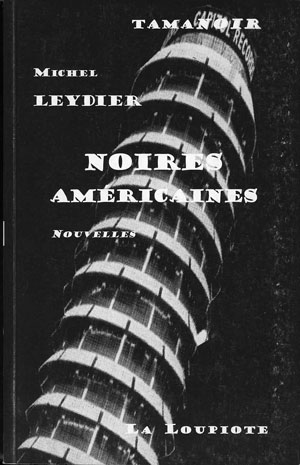
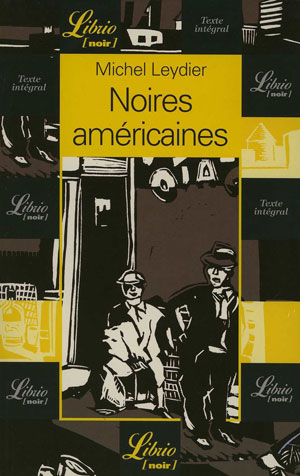
#0062 Michel LEYDIER


LEYDIER Michel, African American women to the new Watermelon Man, 1997, De La Loupiote
Jazz in one of 18 new, but the music is everywhere highlighted (under the title of each story) in the form of some verses of a song (unfortunately translated into French) followed by the title and the author. The song really perfectly announces the tone and atmosphere of the story. It's very well done, and each short story, maintains a real thriller with a surprising drop ever. One that concerns us Watermelon Man does not have many quotes but the atmosphere is jazz.
Exergue: "Jazz is not dead, he just has a funny smell" Frank Zappa & "I saw the needle and its devastation / A little content in each of her / Every junkie is a setting sun "(The Needle And The Damage Done) Neil Young.
Watermelon Man" Jimmy Brown polished his sax with love [...] the slow movements of Jimmy sweeping shadows stealth posters covering the walls. Miles leaning on his trumpet. Bird silhouette rigid with his sax [...] The four Mellow Boys attacked with Watermelon Man, Herbie Hancock classic "The song titles
highlight other stories: Stuck Inside Of Mobile With The Memphis Blues Again, Bob Dylan, The River, Bruce Springsteen, Alabama, Neil Young, If I can do it, so can you, Lee Clayton, Christmas card from a hooker in Minneapolis, Tom Waits Helpless, Neil Young, Secret of the Lock, Michael Chapman, Sons and Daughters, Art Neville, Anyone for tennis?, Eric Clapton, Mummy, Kevin Coyne, Hey Joe, William Roberts, Bobby Brown, Frank Zappa, How Do You Think It Feels Lou Reed, Sittin 'on the Dock of the Bay, Otis Redding, Yellow Moon, Aaron Neville, The Boxer, Paul Simon.

Thursday, January 11, 2007

Christian Sports Mottos

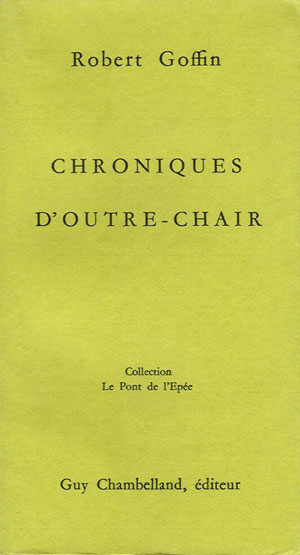
#0061 Robert GOFFIN


The Belgian poet Robert Goffin which celebrated the 1998 centennial of the birth, crossed the twentieth century. It marked his time with his immense talent, his outstanding personality and his love of jazz. Flyer, a friend of celebrities from Europe and America, inveterate hedonist, this brilliant lawyer has lived outside the Belgian literary standards, while ... however, part of the Academy.
Robert Goffin, Chronicles overseas flesh, 1975, Guy Chambelland
At eighty years, a lifetime of memories and jazz poems.
Tribute to beer : "Pale Ale in the papal bull which Louis Armstrong said she was the soul of jazz"
The last round: "All the jazz tunes dedicated to juicy peaches from Georgia / are ground-ragtime-swing up in the ghetto [...] Diana Ross goes radioactive ray eye semaphore [...] The champions of jazz dance and rejoice proudly "
Lightning endless :" Where I found the beautiful black singer Billie Holiday [...] Every night love his intensity accelerates the churning jazz
musical women (Marc Danval) : "Then Sacha Distel had returned the gesture by Ray Ventura / Dinah Shore Before couronnât do this orgy of stars / But all that I clung unexpected that jazz / notes and sounds that I looked in his mid floor F sharp [...] When the light a foxtrot syncopated offered their maze / Of flesh available under the cloak of an aggressive black jazz / The trumpet of Briggs to the lips of cooked shrimp was cutting the rate [...] And I cling to the refrain that quivering reincarnated Billie [...] And in my top amalgam psalms Billie / Me still affecting their lasers the edge of perdition sneaky [...] In a mixture that jazz had welded despite the Jim Crow-[...] Already battered Billie Holiday rhythm and drug / Returned to greediness of eternity, leaving the world / that his music tragic cause fever Voodoo "
Ostend :" But it was when jazz invests Ostend I ransomed / Nights splashed femmes fatales of neon signs and alcohol [...] I still remember the Mitchell's Jazz Kings in the bleachers Helder [...] In the following ramp Billy Smith crushed the dogs Wabash blues / While a smooth slide trombone blows to the heart of beautiful [...] I still remember Jimmy Dorsey and George Bruns dialogue / runoff swing-in percussive improvisations / In front of the orchestra of Ted Lewis wearing a stovepipe [...] I lectured in the large room overflowing with bare shoulders / While the three women twined reed blows sax-appeal [...] When June Cole sported a full moon its souzaphone "
The Field of the Cloth of Gold : "Every night jazz floated over the desire to lead [...] Billie Holiday is welded to my body between trips marijuana"
Mass pepper : "Finally it was dedicating Toxins from jazz to the mythology of the dollar / The mayor of the city negro smiled with all his teeth, neon / black and white choirs howled their lamentations swing [...] How the music born from the depths of his negroes in the dives / On kingdom sex girls with a knife and pimps Basin Street / Was she in a few decades, joined the inattingible (sic) clan money / also closed the court of Louis XIV but with Jelly Roll for Lully [...] That all was not lost for poets who starve / Since the bishops are involved in jazz and celebrate Masses syncopated "
Boris Vian :" Then we got into the tiny cellar with Delaunay / Listen to the rhythm of jurisprudence Dizzie Gillespie / When he heard that I had written several books on jazz / And I had lived for months in New Orleans / It took care of myself and more we left Welded [...] We rowed basking in the anthracite-evoke Billie and Lena Horne [...] While Luter hung without pity the baton of his clarinet / Expressing peaks of Voodoo in a frenzy of slip / Where Mogwli hiccuping between tuba and drum Buridan [...] Boris smiled at the angels in 1946 and played the St. Louis Blues [...] He lived die imperceptibly swing and insomnia [...] Later, under the banner of hands appeared Chittison Jazz 47 [...] Here we are with Roy Eldridge with the perfume of the islands Rhumerie / Don Byas tenor of divine right boning his saxophone [...] I looked pale in locks panting jazz [...] When Lil Armstrong-heiress of Engineering played old tunes / Between me and Boris there were three hundred kilometers of wavelength "
December 29, 1926:" Where I communed with the pulse of the tom-tom negro of New Orleans / I was typing on my plunger while the turns blues haulers [... ] The Georgians Copenhagen shear or Sweet Sixteen to the Alhambra [...] I spent every day at snakes and ladders of life / That with the flick of betroth jazz metaphors of color "
Capital jazz : "Here was the platform where the musician Bob Lyons Bolden cira my shoes [...] Where Big Eye Louis Nelson proved to me that jazz was born in 1900 [...] Farewell Orphanage where Louis Armstrong shearing his mouth copper [...] And all prehistoric ruins in search of my past dejazz [...] This is where jazz was born on the side of the bar by Tom Anderson [...] A little later they opened a museum of jazz that is never empty [...] As thirty years ago and love jazz ferment in the shade [...] Finally it prepares a monumental memorial to King of Jazz Satchmo / Since this morning there is a Belgian Franc in the silt of the Mississippi.